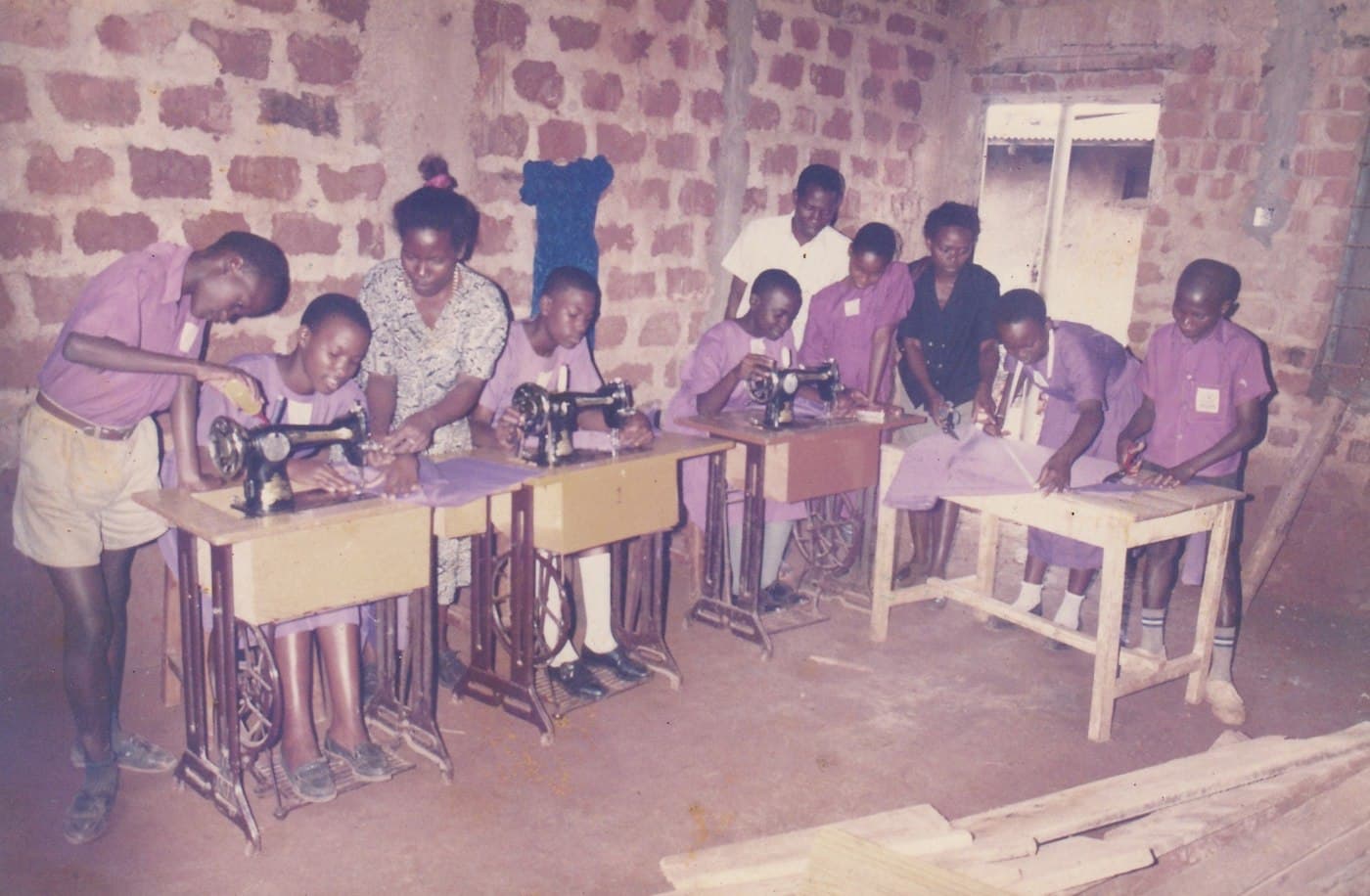
Walk through the Centre on a training day and you'll find a hacksaw biting into pipe in one room, treadle sewing machines running in another, and a row of trainees at desktop computers in a third. It can look like a lot of unrelated activity. It isn't.
Every trade we teach was chosen for the same reason: it leads somewhere. Tailoring and garment design produce something a trainee can sell from day one — a skirt, a school uniform, a repair — in a local market that never stops needing them. Carpentry and joinery turn into furniture, doors, and window frames that every household and building project in the area needs. Welding and metalwork cover everything from gates to farm equipment repair. Weaving sits alongside tailoring as a second textile skill. And computer studies, the newest addition, opens doors that didn't exist for this community a generation ago — record-keeping, basic design work, and the digital literacy that more and more employers now expect.
None of these trades require a trainee to leave Buyinja Butoole to use them. That's deliberate. We're not training people for jobs that only exist somewhere else — we're training people to build a livelihood where they already live, with their family and community around them.
The constraint we're honest about is equipment. A workshop full of trainees and one sewing machine, or two hacksaws between a dozen students, isn't unusual for us. It's the reason vocational training sits at the centre of what we ask supporters for help with — not because the trades themselves are complicated, but because good training needs enough tools to go around.
Interested in supporting this work?
Get involved