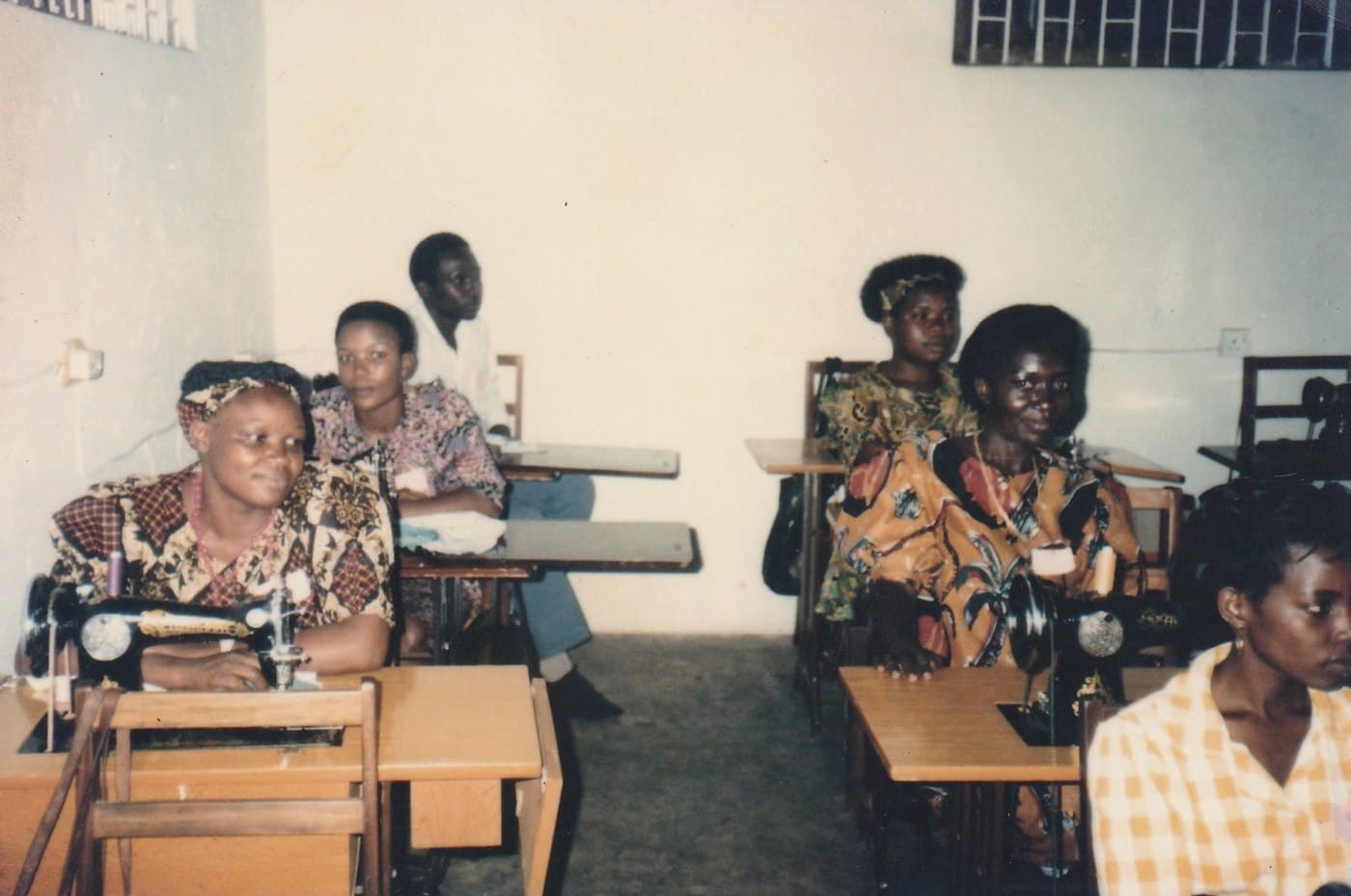
Our tailoring sessions run on treadle sewing machines — the foot-powered kind, no electricity required. That's not nostalgia; it's practical. A treadle machine keeps working through a power cut, needs less maintenance than an electric one, and costs less to keep running over years of daily use in a training environment.
A typical session has trainees working in pairs or small groups around shared machines, since equipment is limited and machines are, quite literally, in demand. Newer trainees start with straight seams and simple garments; more experienced ones move on to pattern-cutting and design. The pace is set by whoever's turn it is at the machine, which makes patience as much a part of the curriculum as stitching.
Tailoring and garment design is one of the trades we can point to most directly when we talk about self-employment. A trainee who finishes the course leaves with a skill that doesn't require a shop, a large loan, or equipment they can't source locally — a sewing machine, thread, and fabric are enough to start taking on work. That low barrier to starting is exactly why we keep investing in it, even as the machines themselves show their age.
Interested in supporting this work?
Get involved